 netken
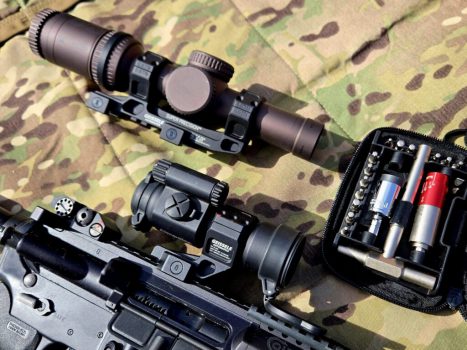
Best LPVO for Range Training: 6 Practical 1-6x Scopes Tested by Use Case
If your LPVO lives mostly on a flat range, a carbine bay, or a weekend training rifle, the “best” scope is not always the most expensive or the highest magnification. For range training, we care about fast 1x presentation, forgiving eye relief, usable illumination, repeatable controls, and value strong enough that you can still afford ammo.
Quick answer: The Primary Arms SLx 1-6×24 Gen IV ACSS Nova is our top pick for most range-training shooters because it balances a bright center aiming point, forgiving eye relief, practical 1-6x magnification, and a price that makes sense for high-round-count practice. The Burris RT-6 is the lightweight value pick, while the Trijicon Credo HX is the premium upgrade if glass quality matters more than budget.
How We Picked the Best LPVOs for Range Training
This guide follows an application-first review model. Instead of ranking LPVOs only by price or maximum magnification, we scored each optic for the way a shooter actually uses it during range practice: shouldering the rifle repeatedly, shooting both eyes open at 1x, confirming holds at distance, using a throw lever under time pressure, and keeping the rifle comfortable through long sessions.
Range Training Scoring System
- 1x speed & field of view: How natural the optic feels for close paper and steel transitions.
- Eyebox and eye relief: How forgiving it is from imperfect positions, barricades, and quick mounts.
- Reticle and illumination: Whether the aiming point is fast, visible, and not overly cluttered.
- Turrets and zero confidence: Capped or locking controls, adjustment feel, and practical confidence after transport.
- Durability and warranty: Build quality, weather resistance, and support reputation.
- Value for training: Price-to-performance, especially when the buyer still needs ammo, magazines, and range time.
Best Range Training LPVOs: Ranked Score Cards
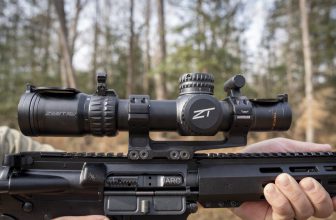
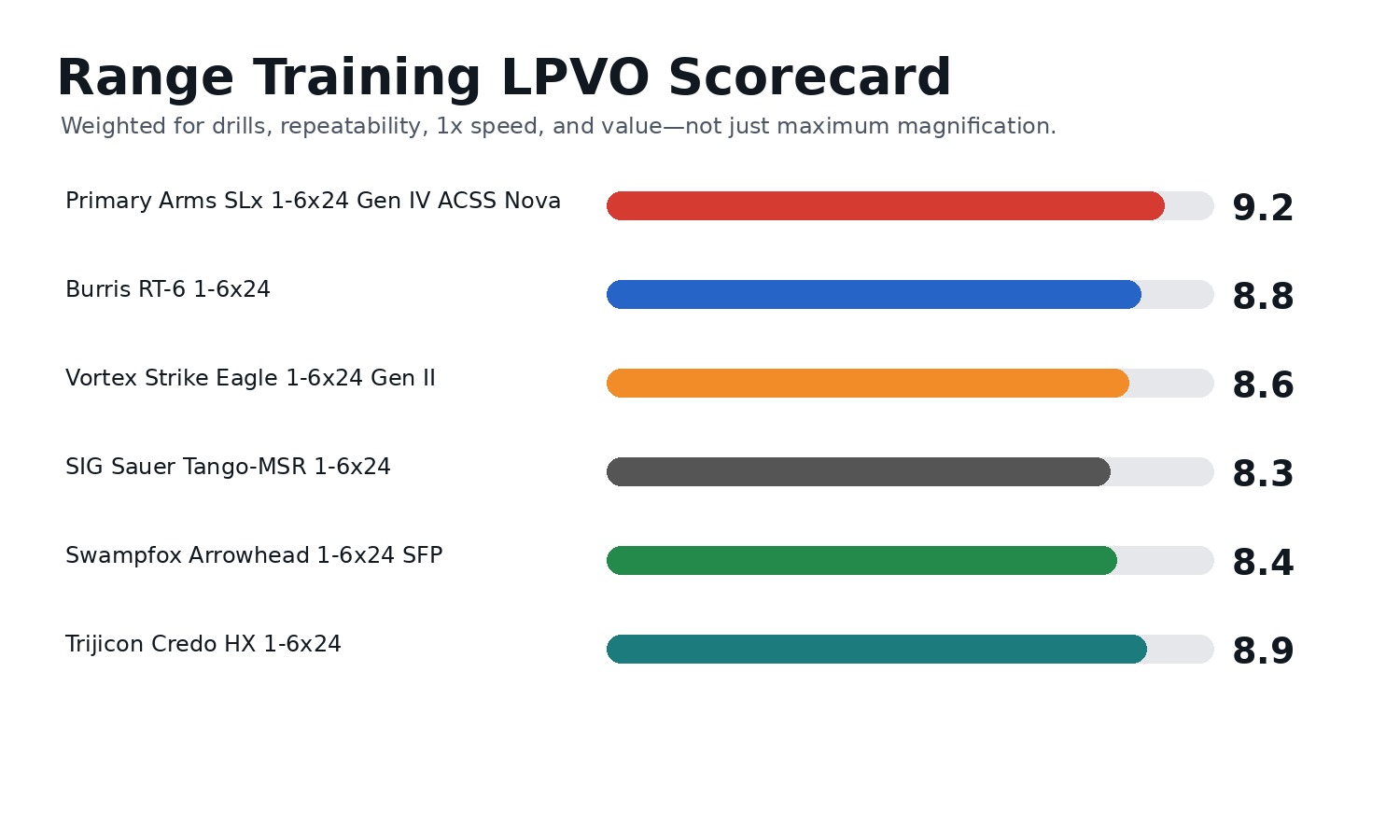
Below is the visual rating module matching the LarkBell beginner LPVO format: each card combines the model image, award label, overall range-training score, core specs, and a practical training note.
Primary Arms SLx 1-6×24 Gen IV ACSS Nova
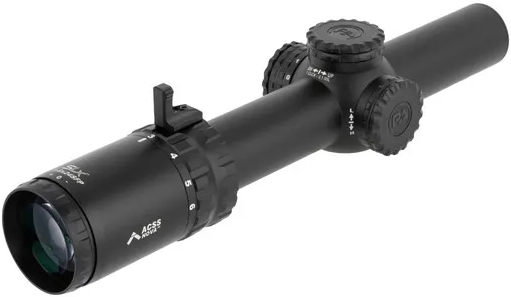
Primary Arms SLx 1-6×24 Gen IV ACSS Nova — product image paired with LarkBell range-training score.
The fastest value pick here: bright center aiming point, forgiving 4-inch eye relief, and enough BDC utility for 25-300 yard practice.
Burris RT-6 1-6×24
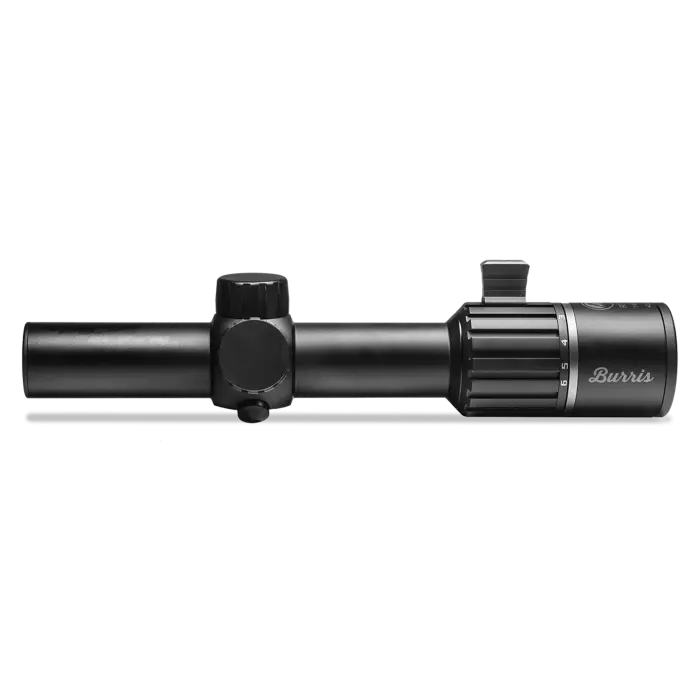
Burris RT-6 1-6×24 — product image paired with LarkBell range-training score.
Short, light, and simple. The RT-6 is ideal when your training rifle needs to stay lively through standing drills and transitions.
Vortex Strike Eagle 1-6×24 Gen II
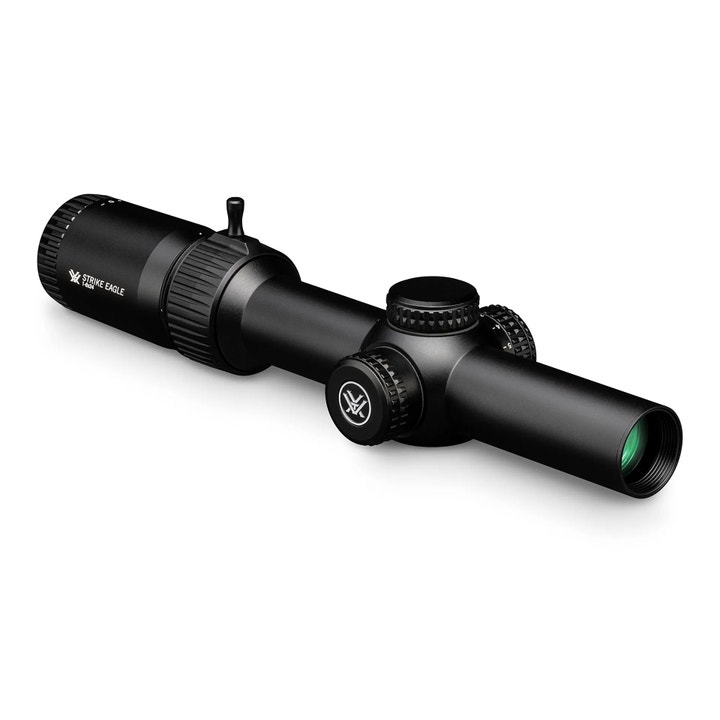
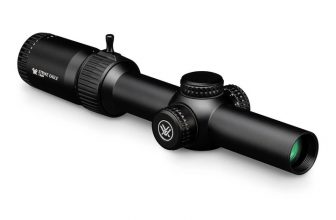
Vortex Strike Eagle 1-6×24 Gen II — product image paired with LarkBell range-training score.
A widely supported starter LPVO with a clear AR-style reticle, included throw lever, and Vortex warranty confidence.
SIG Sauer Tango-MSR 1-6×24
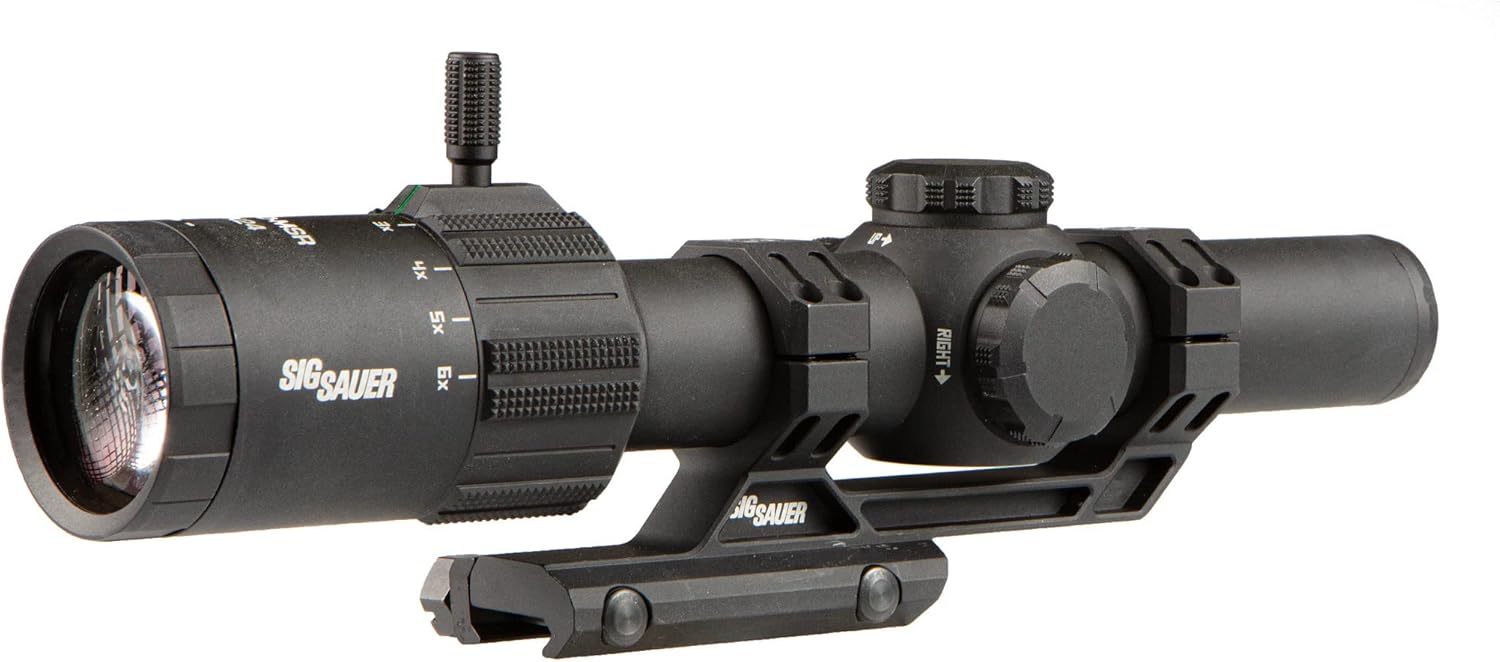
SIG Sauer Tango-MSR 1-6×24 — product image paired with LarkBell range-training score.
The most convenient first-LPVO path when you want the optic and mount handled in one package before heading to the range.
Swampfox Arrowhead 1-6×24 SFP
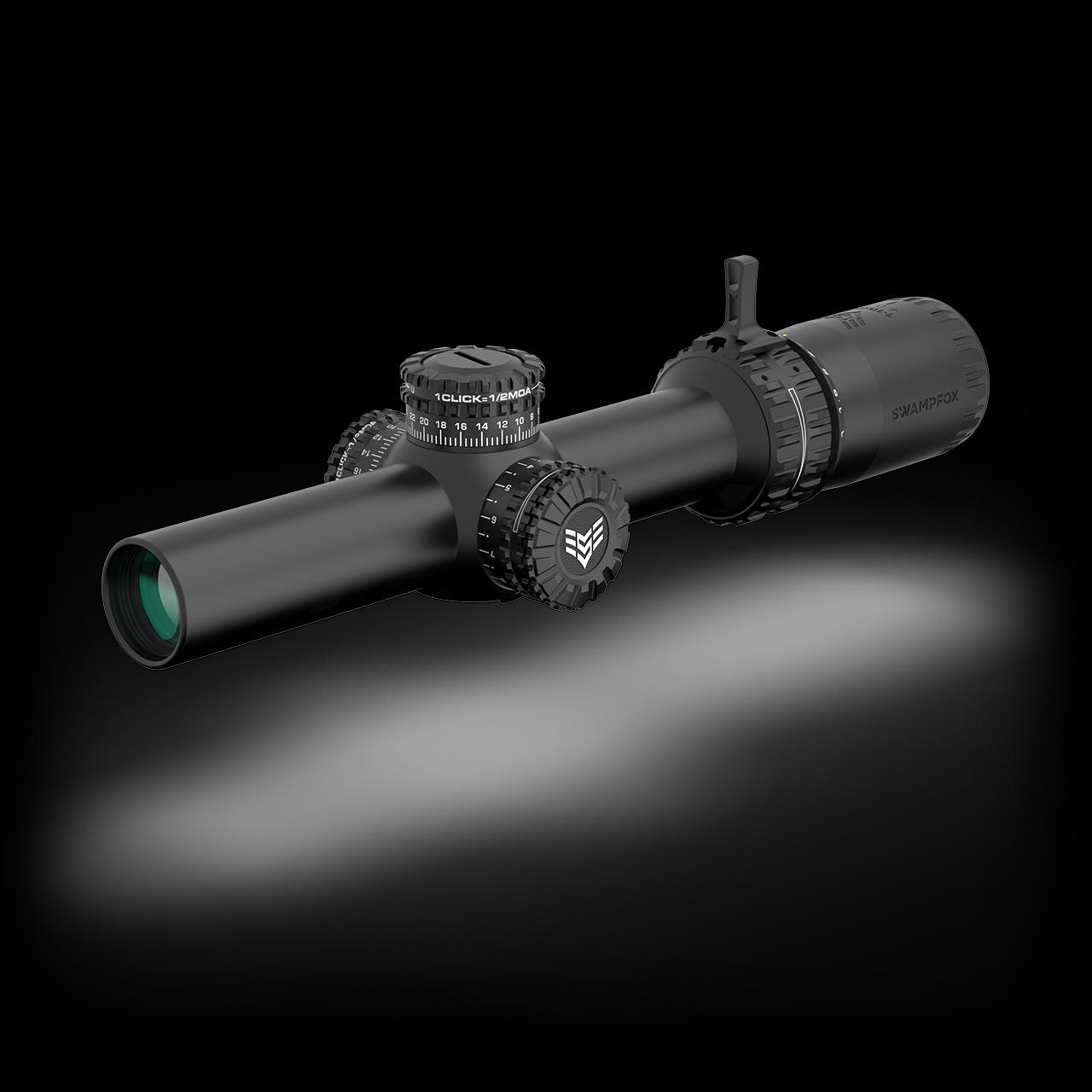
Swampfox Arrowhead 1-6×24 SFP — product image paired with LarkBell range-training score.
The controls pick: push/pull locking turrets, multiple reticle options, and illumination features that suit structured range work.
Trijicon Credo HX 1-6×24
Trijicon Credo HX 1-6×24 — product image paired with LarkBell range-training score.
A premium upgrade for shooters who train often and want better glass, stronger build quality, and long-term confidence.
Best LPVO for Range Training — Comparison Table
| Rank | LPVO | Magnification | Weight | Eye Relief | Reticle | Score |
|---|---|---|---|---|---|---|
| #1 | Primary Arms SLx 1-6×24 Gen IV ACSS Nova Best Overall LPVO for Range Training |
1-6x | 17.9 oz | 4.0 in | ACSS Nova fiber-wire BDC | 9.2 |
| #2 | Burris RT-6 1-6×24 Best Lightweight Training LPVO |
1-6x | 17.4 oz | 3.3-4.0 in | Ballistic AR / Ballistic 5X | 8.8 |
| #3 | Vortex Strike Eagle 1-6×24 Gen II Best Familiar AR Training LPVO |
1-6x | 18.5 oz | 3.5 in | AR-BDC3 MOA | 8.6 |
| #4 | SIG Sauer Tango-MSR 1-6×24 Best Starter Kit with Mount |
1-6x | 18.5 oz scope / about 1.6 lb with mount | 3.74-3.93 in | Illuminated MSR-BDC6 | 8.3 |
| #5 | Swampfox Arrowhead 1-6×24 SFP Best Controls and Locking Turrets |
1-6x | 20.36 oz | 3.39-3.54 in | Guerrilla Dot BDC / MIL / MOA options | 8.4 |
| #6 | Trijicon Credo HX 1-6×24 Best Premium Training Upgrade |
1-6x | 18.3 oz | 3.5-3.9 in | PowerDot / BDC Hunter Holds options | 8.9 |
Product Image Gallery
Additional model-specific product images are included for quick visual comparison before the detailed reviews.
#1 Primary Arms SLx 1-6×24 Gen IV ACSS Nova — Best Overall LPVO for Range Training
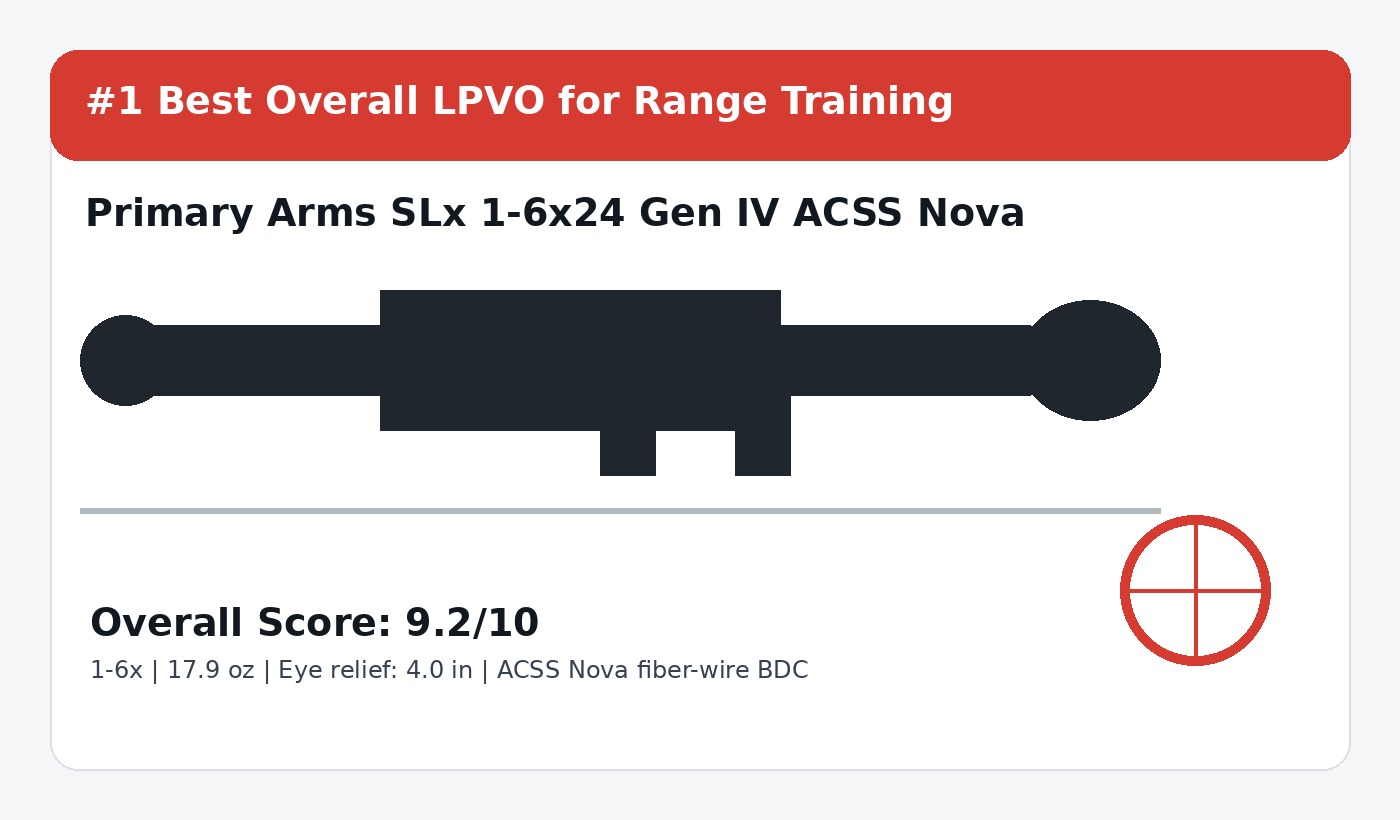
Why it made the list: The SLx Nova is the optic we would put on a range-training AR when the goal is speed first, not bragging rights. Its Red Dot Bright-style center aiming point makes close paper, steel transitions, and 1x cadence drills feel more natural than many budget LPVOs.
| 1x speed & FOV | 9.4 | |
| Eyebox / eye relief | 9.1 | |
| Reticle & illumination | 9.6 | |
| Turrets / zero confidence | 8.7 | |
| Durability & warranty | 8.8 | |
| Value for training | 9.5 | |
| Overall Range Training Score | 9.2/10 |
Pros
- Bright center aiming point works well for fast 1x drills
- Forgiving four-inch eye relief for imperfect range positions
- Strong value without feeling like a throwaway starter optic
Cons
- Edge performance and glass are not premium-class
- SFP BDC is fastest at known magnification assumptions
Range Training Test Notes
- Close-range work: Run both-eyes-open target transitions at 7, 15, and 25 yards. Watch how quickly the reticle appears when the stock lands slightly imperfectly.
- Mid-range confirmation: Confirm holds at 100, 200, and 300 yards rather than only checking a single zero group.
- Handling: Practice moving from 1x to 4x/6x with the throw lever before loading magazines. A good LPVO should not break your cadence.
#2 Burris RT-6 1-6×24 — Best Lightweight Training LPVO
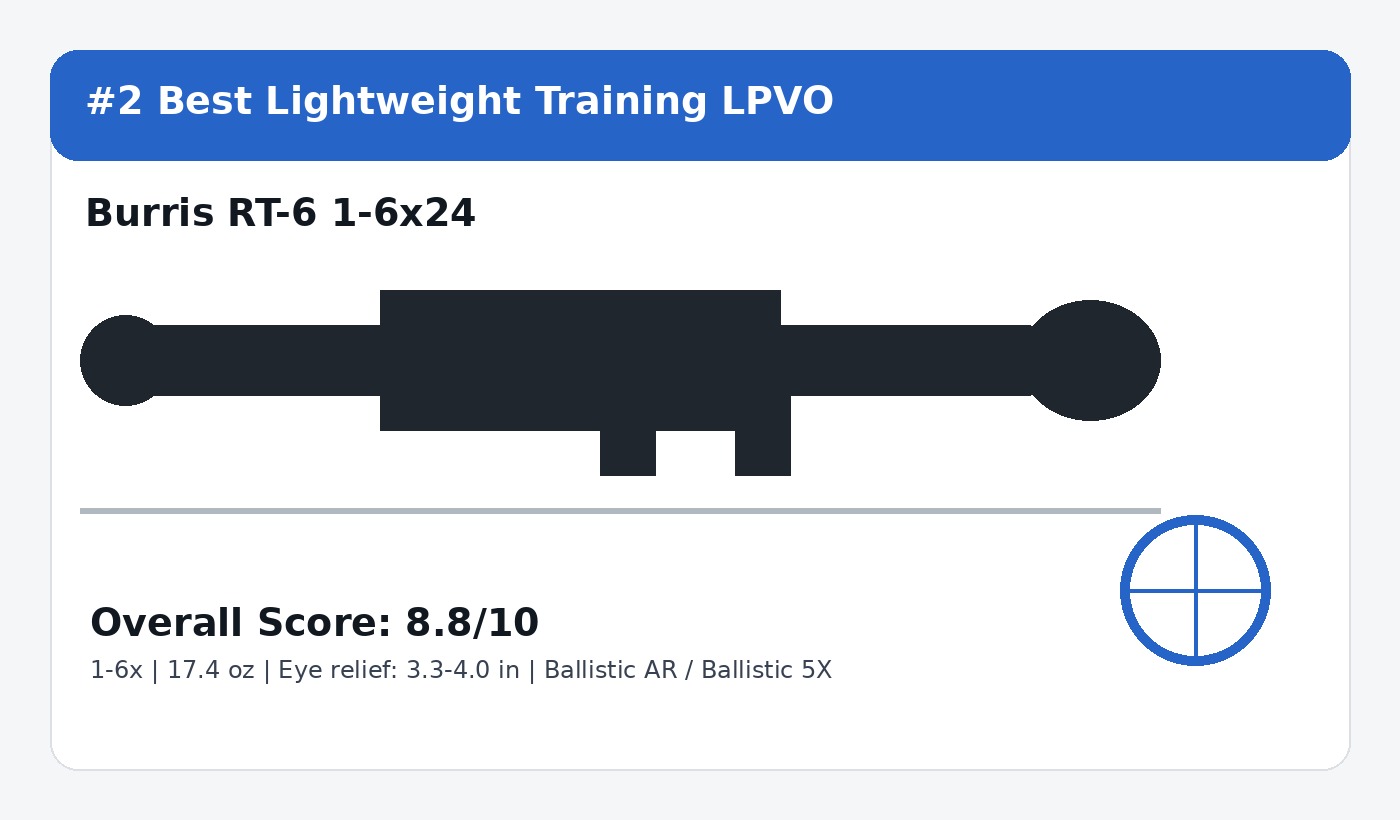
Why it made the list: The RT-6 is for shooters who want to spend more time practicing than adjusting gear. It is short, light, and simple, which matters when the rifle is coming up and down all afternoon.
| 1x speed & FOV | 8.9 | |
| Eyebox / eye relief | 8.8 | |
| Reticle & illumination | 8.2 | |
| Turrets / zero confidence | 8.8 | |
| Durability & warranty | 8.9 | |
| Value for training | 9.1 | |
| Overall Range Training Score | 8.8/10 |
Pros
- Lightweight and short for long training days
- Simple, uncluttered ballistic reticle
- Very strong reputation as a starter LPVO
Cons
- Illumination is useful but not the brightest in the group
- FOV is good but not class-leading
Range Training Test Notes
- Close-range work: Run both-eyes-open target transitions at 7, 15, and 25 yards. Watch how quickly the reticle appears when the stock lands slightly imperfectly.
- Mid-range confirmation: Confirm holds at 100, 200, and 300 yards rather than only checking a single zero group.
- Handling: Practice moving from 1x to 4x/6x with the throw lever before loading magazines. A good LPVO should not break your cadence.
#3 Vortex Strike Eagle 1-6×24 Gen II — Best Familiar AR Training LPVO
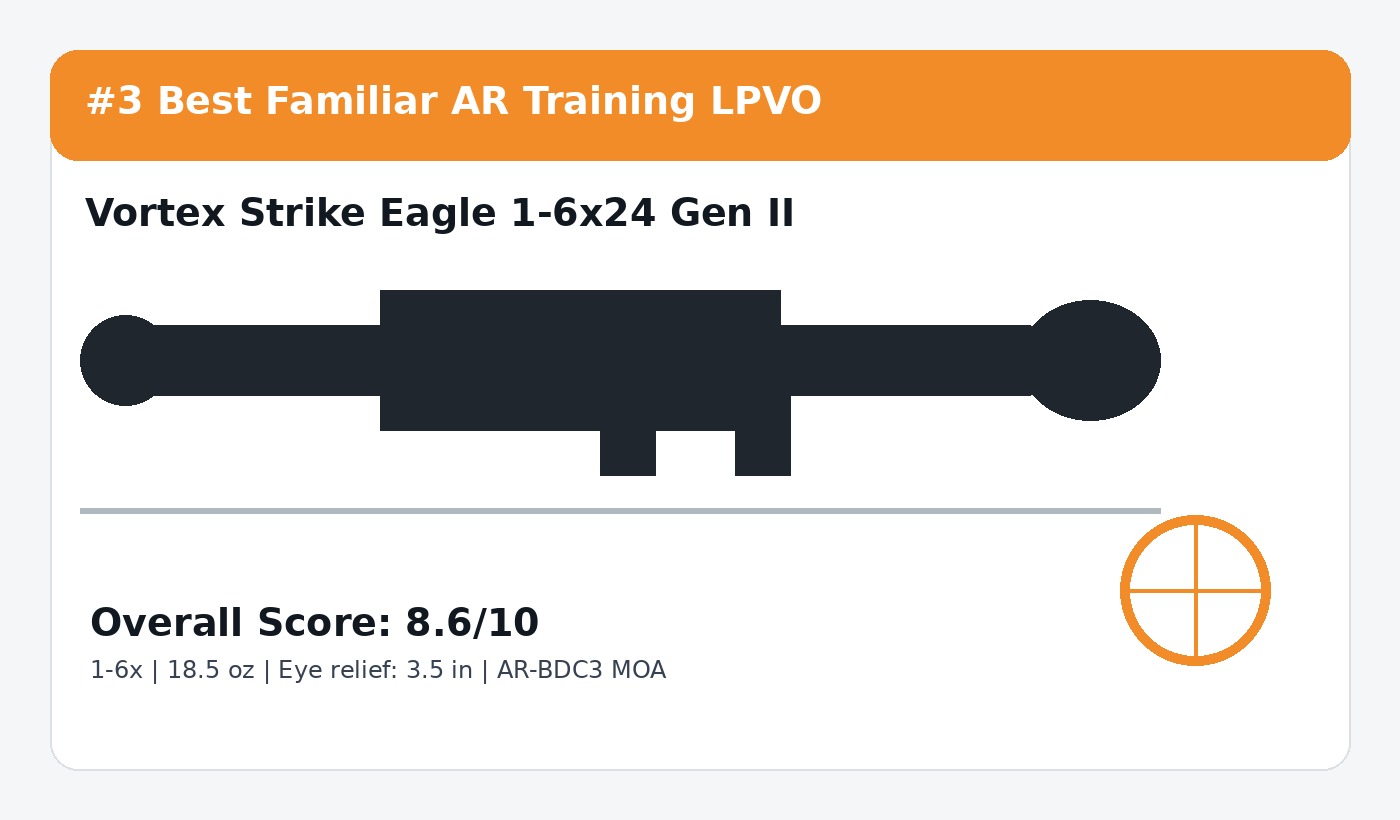
Why it made the list: The Strike Eagle is not the most exotic LPVO, but it is easy to understand and easy to recommend. The AR-BDC3 reticle, 1 MOA center dot, broken circle, and included throw lever make it very usable for AR range work.
| 1x speed & FOV | 8.6 | |
| Eyebox / eye relief | 8.4 | |
| Reticle & illumination | 8.4 | |
| Turrets / zero confidence | 8.6 | |
| Durability & warranty | 9.0 | |
| Value for training | 8.7 | |
| Overall Range Training Score | 8.6/10 |
Pros
- Wide 1x field of view and familiar AR-BDC3 layout
- Included throw lever and strong lifetime warranty
- Easy recommendation for AR owners who want a mainstream LPVO
Cons
- 3.5-inch eye relief is less forgiving than the top pick
- Glass and illumination are practical rather than premium
Range Training Test Notes
- Close-range work: Run both-eyes-open target transitions at 7, 15, and 25 yards. Watch how quickly the reticle appears when the stock lands slightly imperfectly.
- Mid-range confirmation: Confirm holds at 100, 200, and 300 yards rather than only checking a single zero group.
- Handling: Practice moving from 1x to 4x/6x with the throw lever before loading magazines. A good LPVO should not break your cadence.
#4 SIG Sauer Tango-MSR 1-6×24 — Best Starter Kit with Mount
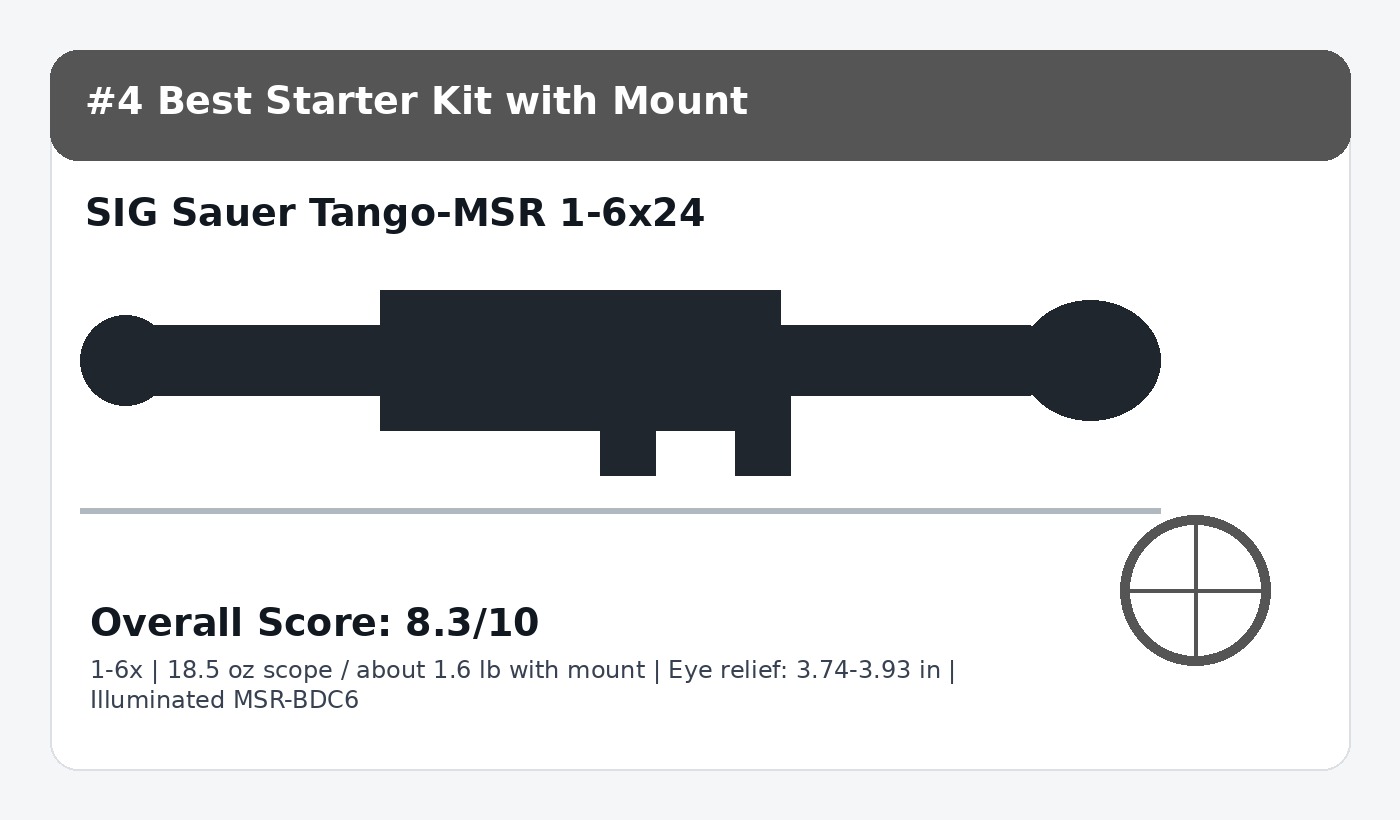
Why it made the list: The Tango-MSR makes sense for a new shooter building a rifle and optic setup at the same time. The included mount reduces decision fatigue, and the 1-6x range covers the usual 25-300 yard range day.
| 1x speed & FOV | 8.3 | |
| Eyebox / eye relief | 8.2 | |
| Reticle & illumination | 8.0 | |
| Turrets / zero confidence | 8.0 | |
| Durability & warranty | 8.3 | |
| Value for training | 9.0 | |
| Overall Range Training Score | 8.3/10 |
Pros
- Often sold as a complete optic-and-mount package
- Good eye relief range for the price
- Low barrier to entry for a first training LPVO
Cons
- Mount-included value can hide optic-only compromises
- Not as refined optically as the best budget performers
Range Training Test Notes
- Close-range work: Run both-eyes-open target transitions at 7, 15, and 25 yards. Watch how quickly the reticle appears when the stock lands slightly imperfectly.
- Mid-range confirmation: Confirm holds at 100, 200, and 300 yards rather than only checking a single zero group.
- Handling: Practice moving from 1x to 4x/6x with the throw lever before loading magazines. A good LPVO should not break your cadence.
#5 Swampfox Arrowhead 1-6×24 SFP — Best Controls and Locking Turrets
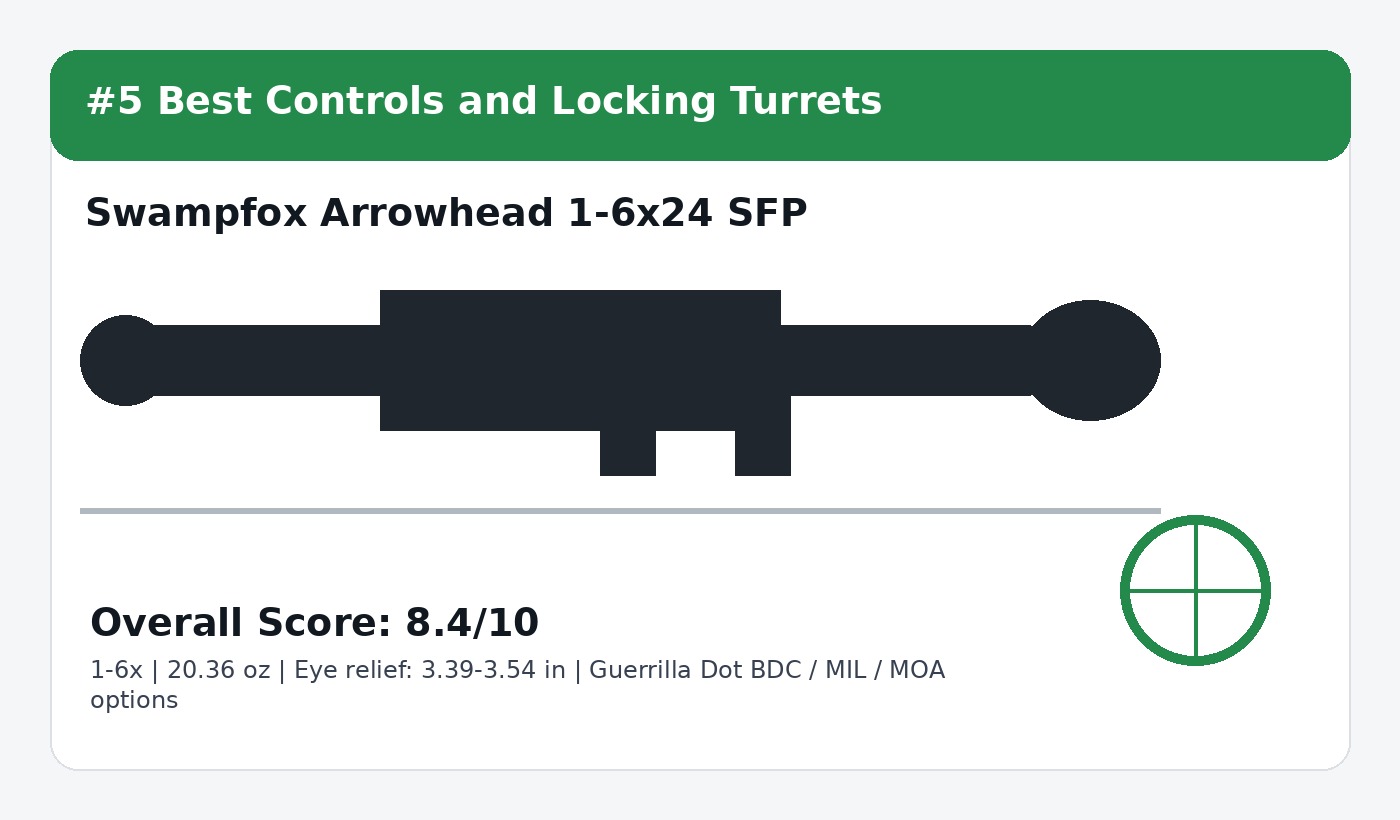
Why it made the list: The Arrowhead is the controls pick. If your training involves moving between benches, barricades, bags, and vehicles, locking turrets and robust illumination controls are genuinely useful.
| 1x speed & FOV | 8.2 | |
| Eyebox / eye relief | 8.0 | |
| Reticle & illumination | 8.6 | |
| Turrets / zero confidence | 9.0 | |
| Durability & warranty | 8.6 | |
| Value for training | 8.1 | |
| Overall Range Training Score | 8.4/10 |
Pros
- Push/pull locking turrets are excellent for range bags and classes
- 12 illumination settings with intermittent off positions
- Multiple reticle options for different training styles
Cons
- Heavier than several 1-6x competitors
- Eyebox is less forgiving on awkward positions
Range Training Test Notes
- Close-range work: Run both-eyes-open target transitions at 7, 15, and 25 yards. Watch how quickly the reticle appears when the stock lands slightly imperfectly.
- Mid-range confirmation: Confirm holds at 100, 200, and 300 yards rather than only checking a single zero group.
- Handling: Practice moving from 1x to 4x/6x with the throw lever before loading magazines. A good LPVO should not break your cadence.
#6 Trijicon Credo HX 1-6×24 — Best Premium Training Upgrade
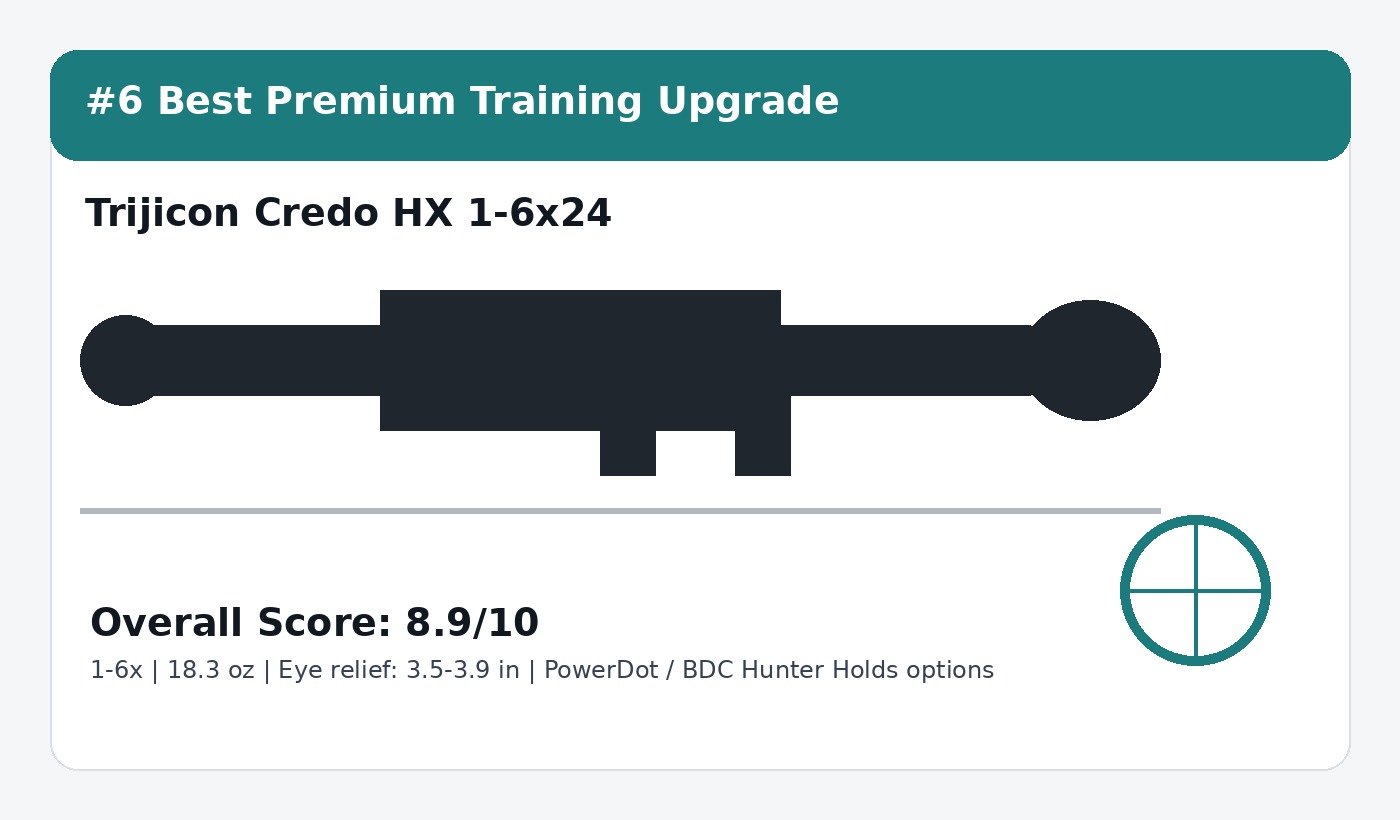
Why it made the list: The Credo HX is the premium sanity check: it shows what better glass, build, and controls bring to training. It is not the cheapest path, but it rewards shooters who train frequently and notice optical fatigue.
| 1x speed & FOV | 9.0 | |
| Eyebox / eye relief | 9.2 | |
| Reticle & illumination | 8.8 | |
| Turrets / zero confidence | 9.1 | |
| Durability & warranty | 9.5 | |
| Value for training | 7.6 | |
| Overall Range Training Score | 8.9/10 |
Pros
- Better glass and build quality than budget LPVOs
- Good eye relief and dependable controls
- Premium option for shooters who train often
Cons
- Cost is high for a pure range-training optic
- Hunting reticle variants may not be ideal for every AR drill
Range Training Test Notes
- Close-range work: Run both-eyes-open target transitions at 7, 15, and 25 yards. Watch how quickly the reticle appears when the stock lands slightly imperfectly.
- Mid-range confirmation: Confirm holds at 100, 200, and 300 yards rather than only checking a single zero group.
- Handling: Practice moving from 1x to 4x/6x with the throw lever before loading magazines. A good LPVO should not break your cadence.
Why 1-6x Usually Beats 1-8x or 1-10x for Range Training
For most range days, a good 1-6x LPVO is the sweet spot. Higher magnification can be useful, but it often brings a tighter eyebox, narrower field of view, more weight, and slower target acquisition. On a square range or carbine bay, the shooter usually benefits more from a clean 1x, visible reticle, and forgiving head position than from extra magnification that only gets used at the end of the session.
If your range training regularly includes small targets beyond 400 yards, a 1-8x may make sense. If your practice is mostly 7-300 yards, 1-6x remains the most balanced choice.
LPVO Setup Tip: Do Not Judge 1x Before Adjusting the Diopter
Many shooters mount an LPVO, glance through it at 1x, and immediately complain about fisheye or distortion. Before judging the optic, set the magnification to 1x, aim at a safe blank background, and adjust the diopter until the reticle is crisp and the view feels natural with both eyes open. Then confirm that the image still feels comfortable at 4x or 6x. This small setup step can make a budget LPVO feel much faster.
Buyer Guide: What Matters Most for a Range-Training LPVO?
1. A bright, simple center aiming point
Range training rewards speed. A visible center dot, horseshoe, or bold segmented circle helps the eye return to the target quickly. A complicated Christmas-tree reticle may be useful for precision work, but it can slow down basic carbine drills.
2. Forgiving eyebox over extreme magnification
When you are shooting from a bench, a perfect cheek weld is easy. When you are moving between positions, it is not. A forgiving eyebox keeps the scope usable when your head placement is slightly off.
3. Sensible turrets
Most range-training shooters do not dial constantly with an LPVO. Capped or locking turrets are often better than exposed tactical turrets because they protect your zero in a range bag.
4. Weight and balance
An LPVO is heavier than a red dot. Once you add a mount, the rifle can feel nose-heavy. If you train for multiple hours, ounces matter.
5. Real value
A range optic should leave room in the budget for ammunition and practice. A $1,000 optic can be excellent, but a $300-$500 optic plus several range sessions may make a better shooter.
FAQ
Is an LPVO good for range training?
Yes. An LPVO is excellent for range training when you want one optic that can handle close-range drills at 1x and mid-range confirmation at 4x to 6x. It is slower and heavier than a red dot, but far more flexible.
What magnification is best for range training?
For most AR-style range training, 1-6x is the best balance. It is fast enough at 1x and provides enough magnification for 200-300 yard work without the tighter eyebox common on many 1-8x and 1-10x scopes.
Do I need daylight-bright illumination?
It helps, especially for close-range drills on bright days. However, the etched reticle should still be usable without illumination. Treat brightness as a speed feature, not as the only way to aim.
Should I choose MOA, MIL, or BDC?
For range training with a common AR setup, a simple BDC can be fast and easy. MOA or MIL reticles are better if you want to learn measurement-based holds across different rifles and loads.
What is the best budget LPVO for range training?
The Primary Arms SLx 1-6×24 Gen IV ACSS Nova is our best overall budget-friendly choice. The Burris RT-6 is a strong lightweight alternative, and the SIG Tango-MSR is attractive when you want a mount included.
Final Verdict
The best LPVO for range training is the one that disappears behind the rifle: fast at 1x, forgiving from imperfect positions, clear enough at distance, and affordable enough that you keep training. For most shooters, that optic is the Primary Arms SLx 1-6×24 Gen IV ACSS Nova. If you want a lighter and simpler option, buy the Burris RT-6. If you train often enough to justify premium glass, the Trijicon Credo HX is the upgrade pick.
Sources and Research Notes
- Primary Arms SLx 1-6×24 Gen IV official product page
- Pew Pew Tactical Primary Arms SLx Gen IV review
- Burris RT-6 official product page
- Vortex Strike Eagle 1-6×24 official product page
- SIG Sauer Tango-MSR 1-6×24 SFP official product page
- Swampfox Arrowhead LPVO official product page
- Trijicon Credo HX 1-6×24 official product family
- Target Tamers LPVO methodology reference
Editorial note: Product specs and prices can change. Scores are based on range-training suitability, published specifications, manufacturer information, and cross-checked third-party/user feedback available at the time of writing.