
 netken
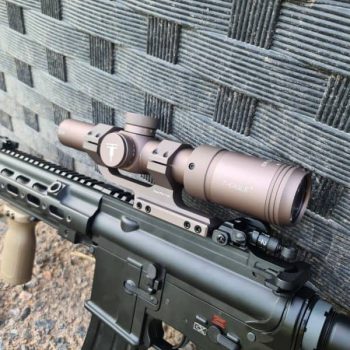
LPVO vs Red Dot for Airsoft: Use-Case Decision Guide for CQB, Woodland and DMR Builds
We use-case compared the two most common airsoft optic paths — a short-dot LPVO and a red dot / holographic-style sight — using real skirmish priorities: speed, mask-friendly eye box, BB protection, weight, mid-range spotting and upgrade cost.
Quick verdict
If most of your game happens inside 30 meters, buy the red dot. It is faster, lighter, has unlimited eye relief, and is much easier to use while wearing goggles or a full-face mask. If you play outdoors and often need to identify movement at 40–70 meters, buy the LPVO. Magnification helps you read lanes, spot armbands, track BB flight, and run a DMR-style position more confidently.
The important caveat: an LPVO does not make your airsoft rifle shoot farther. It makes you see and decide better at distance. A red dot does not give you magnified information, but it lets you engage faster when speed matters more than detail.
Contents
- Why this comparison matters for airsoft
- LPVO vs red dot decision table
- Research methodology and evidence level
- LPVO use-case comparison notes
- Red dot use-case comparison notes
- Relevant product references
- Recommended setups by playstyle
- Lens protection and mounting notes
- ReHub scoring logic
- Sources and research notes
Why this comparison matters for airsoft
Real-steel optic advice does not translate perfectly to airsoft. Most airsoft hits happen at short to medium distances, BBs follow a curved hop-up trajectory, and your face protection changes how easy an optic is to use. That is why “LPVO vs red dot” should be treated as a playstyle decision, not a spec-sheet contest.
Red dot advantage
Fast both-eyes-open aiming, unlimited eye relief, minimal weight, and easier use from awkward positions.
LPVO advantage
Magnification for target ID, lane watching, DMR-style play, and confirming movement through foliage.
Shared airsoft problem
Neither optic is field-ready until the front lens is protected from BB impact.
Airsoft Milsim News and Socom Tactical both frame the decision around conditions: close-quarters speed favors non-magnified sights, while LPVOs become useful when distance, target identification, and varied field layouts matter. Reddit airsoft discussions show the same split: many players prefer red dots for general skirmishing, while DMR and outdoor players accept the LPVO eye-box penalty for better information at distance.
LPVO vs Red Dot Decision Table
| Airsoft use case | Better choice | Why it wins | What to watch |
|---|---|---|---|
| Indoor CQB / room clearing | Red dot | Unlimited eye relief, wide awareness, no magnification delay. | Use the right brightness; protect the lens. |
| Fast outdoor AEG | Red dot or 1-4x LPVO | Red dot is faster; 1-4x LPVO works if you want occasional ID. | 1-6x can be more scope than needed. |
| Woodland / mixed field | LPVO | 3x–4x helps spot movement, armbands, and BB flight through brush. | Keep it at 1x while moving. |
| DMR / 416 / MK12 / SR-25 build | LPVO | The rifle role benefits from observation and hold references. | Does not increase actual BB range. |
| Full-face mask / awkward cheek weld | Red dot | Forgives head position much better. | A riser may still be needed. |
| Milsim realism / clone-correct rifle | Depends | EXPS-style red dots, LPVOs and LPVO+offset dot setups all fit different references. | Do not sacrifice usability just for looks. |
Research methodology and evidence level
This is a market-researched, spec-compared and use-case compared decision guide. It is not presented as a first-hand lab test or a field-shot product review. The goal is to help airsoft buyers decide which optic type fits their field and replica setup before spending money.
What we used
Manufacturer specs, retailer listings, existing LarkBell product records, public airsoft guides, and repeated community discussion patterns around CQB, woodland and DMR optics.
What we did not claim
No independent resolution chart, low-light meter, live-fire recoil test, or controlled through-the-scope image test was performed for this comparison.
How to read the verdict
Treat each verdict as a buyer decision framework: red dot for speed and mask forgiveness; LPVO for outdoor information and DMR-style observation.
| Evidence layer | Used in this article | Confidence role |
|---|---|---|
| Local LarkBell records | T-Eagle ER review, Best LPVO for Airsoft, VictOptics S6, SpecPrecision EXPS3 guide | Gives product-specific context already published on guide.larkbell.com. |
| Market and retailer data | Public product pages, optic specs and buyer-facing package information | Checks magnification range, weight class, reticle type and buyer positioning. |
| Community and specialist discussion | Airsoft guide sites and Reddit airsoft discussions | Validates common usability problems: mask clearance, eye box, BB protection and field distance. |
| Editorial synthesis | Scenario tables, setup recommendations and ReHub scoring | Turns raw information into a practical buying decision framework. |
LPVO use-case comparison notes: what it does better
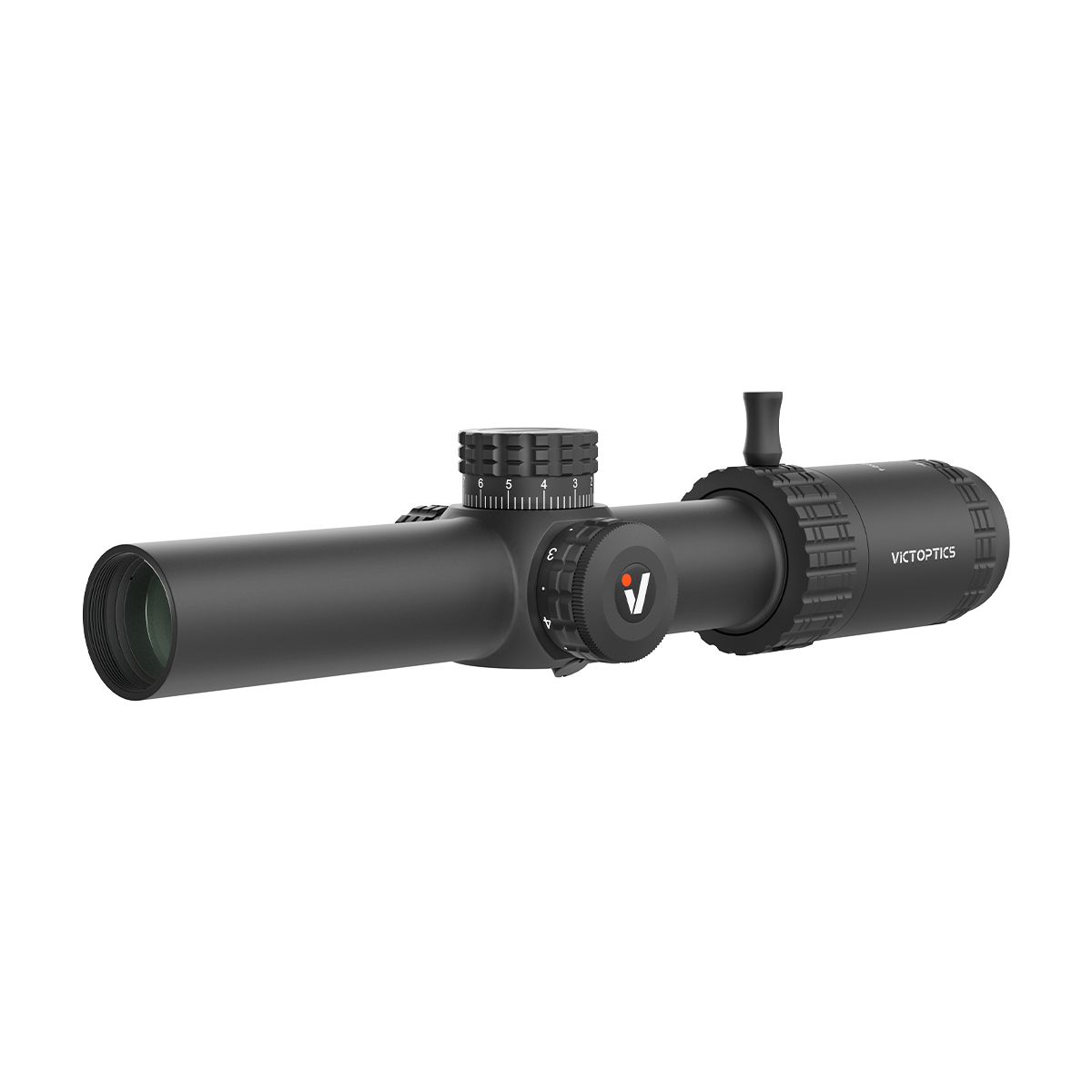
An LPVO — Low Power Variable Optic — usually starts near 1x and goes to 4x, 6x, 8x or higher. For airsoft, 1-4x and 1-6x are the sweet spot. More magnification is not automatically better because airsoft engagement distances and BB precision do not justify heavy 1-8x or 1-10x optics for most players.
The practical win is observation. On a woodland field, 3x or 4x can help you confirm whether that tan patch is a sleeve, a branch, or your teammate. On a DMR build, magnification helps you watch lanes and correct hop-up by seeing BB flight.
| LPVO strength | Airsoft translation | Best magnification use |
|---|---|---|
| Variable magnification | Switch from movement to observation without changing optic. | 1x while moving, 3–4x for lanes, 6x for slow checking. |
| Etched reticle | Still visible if the battery dies; useful for hold references. | Use holds only after verifying BB trajectory at your field distances. |
| Throw lever | Faster zoom changes while wearing gloves. | Worth having on every airsoft LPVO. |
| DMR aesthetics | Fits 416/417, MK12, SR-25 and modern outdoor builds. | Looks right and adds real field utility. |
LPVO downside: even at 1x, you still have eye relief and eye box. With a mesh mask or Dye-style mask, getting perfectly behind the optic can slow you down. Budget LPVOs can also be 1.1x–1.25x rather than a perfect true 1x, which makes them less natural indoors.
Red dot use-case comparison notes: what it does better
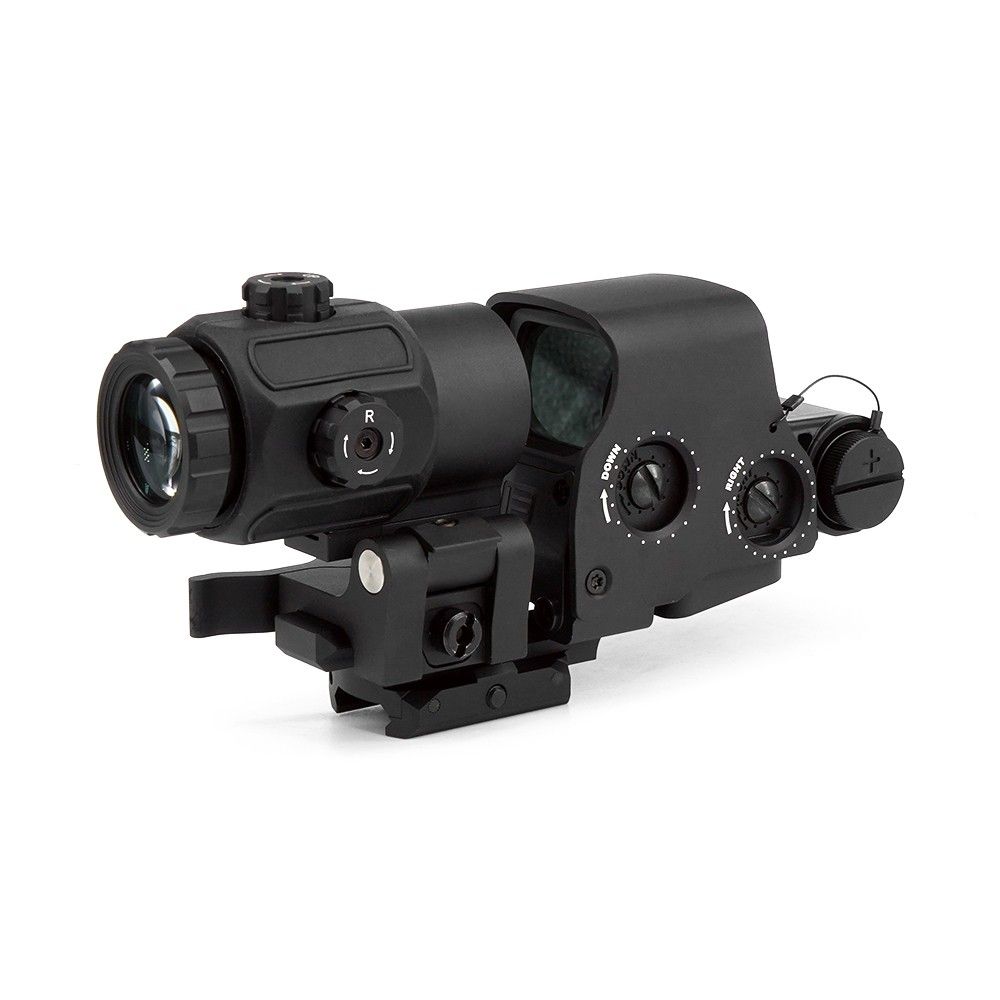
A red dot is the default answer for fast airsoft because it is easier to use from imperfect positions. You do not need scope eye relief, you do not need to center your head as precisely, and the sight picture stays fast with both eyes open.
That matters more than many beginners expect. Airsoft positions are messy: leaning around cover, shooting through windows, moving with a mask, or snapping the rifle up after a sprint. In those moments, the red dot is simply more forgiving.
Why red dots win CQB
- Unlimited eye relief
- Lightweight and compact
- Fast target transitions
- Works better with masks and risers
- Easy passive aiming reference
Where red dots fall short
- No target identification at distance
- Dot can wash out or starburst
- Small targets can be covered by the dot
- Magnifier adds cost and weight
- Cheap lenses still need protection
For pure speed, a red dot still beats an LPVO. Even LPVO-friendly sources usually concede this: a red dot has simpler sight alignment, fewer optical compromises, and better awareness. The decision changes only when the field gives you enough distance that magnification becomes useful.
Relevant product references from our records
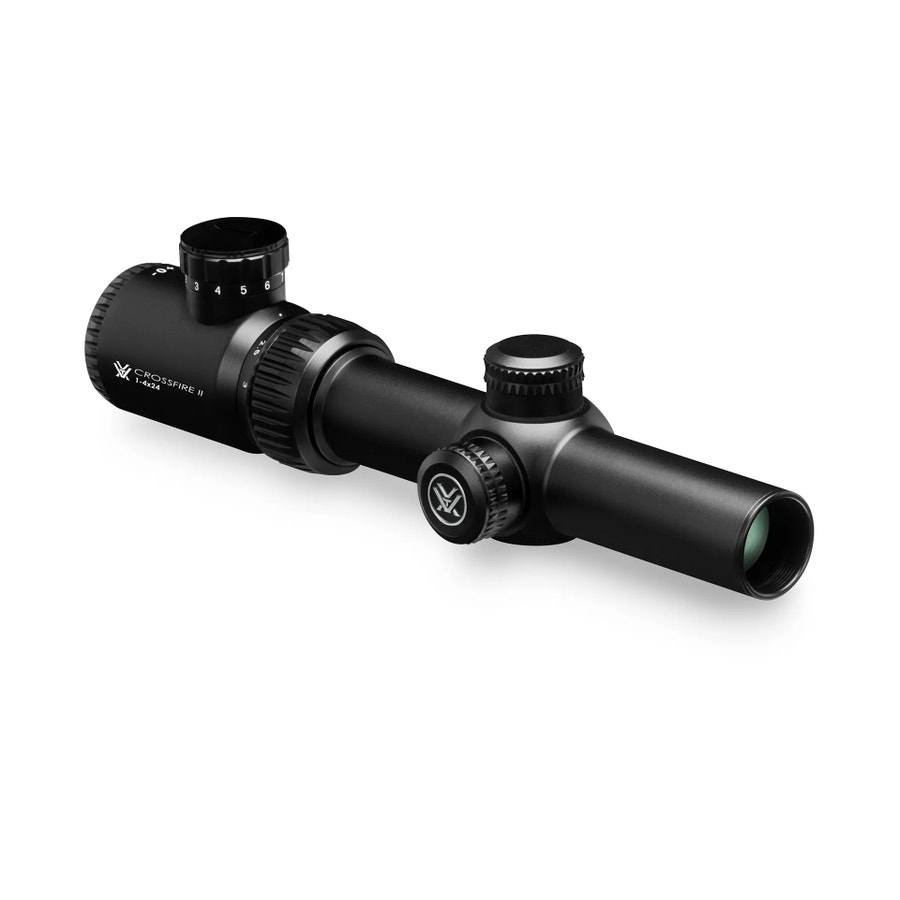
From previous LarkBell guide records, the most relevant LPVO and red-dot references are the T-Eagle ER 1.2-6×24, VictOptics S6 Fiber, Vortex Crossfire II 1-4×24, Firefield RapidStrike 1-6×24 and SpecPrecision EXPS3-style sights. They cover the actual buyer range: ultra-budget airsoft LPVO, stronger budget LPVO, mainstream 1-4x, kit-style LPVO, and fast red-dot/holographic-style builds.
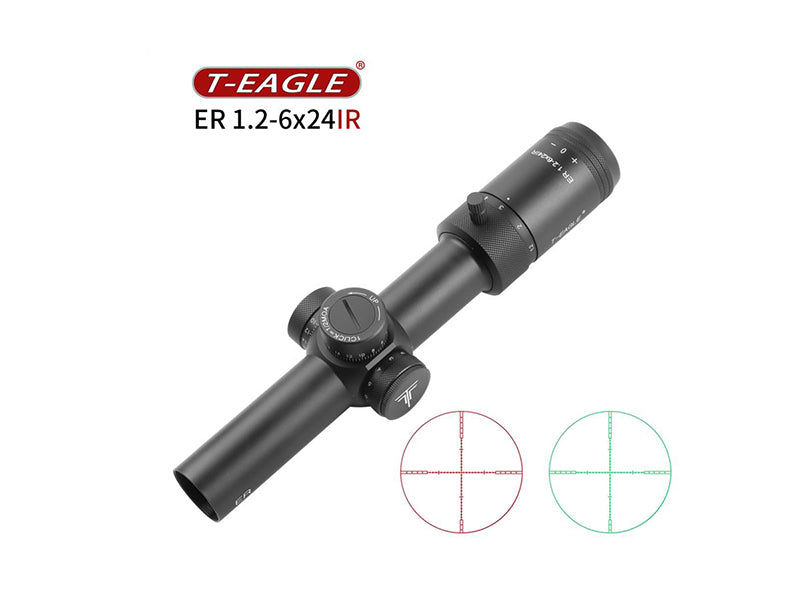
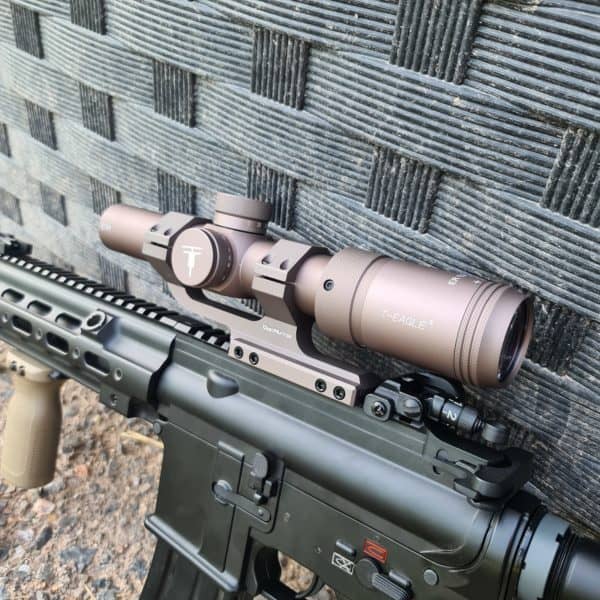
T-Eagle ER / EOS 1.2-6×24 — budget short-dot LPVO
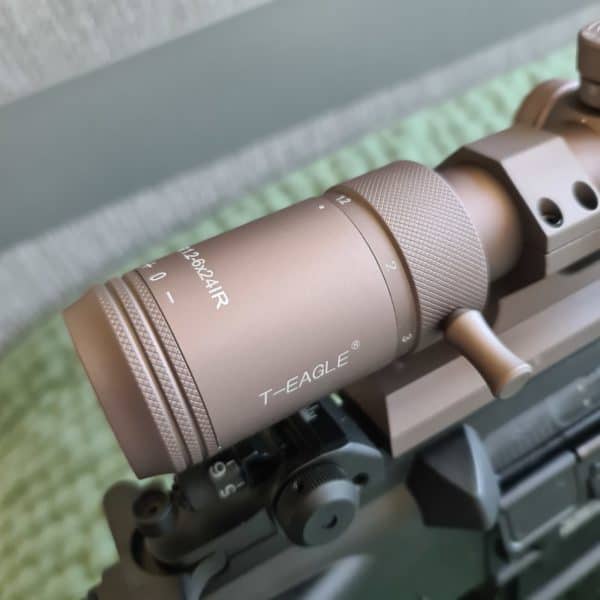
Our earlier T-Eagle ER review found it makes the most sense on airsoft DMR, 416/417, MK12-style and outdoor replicas. Sniper Mechanic’s real-world airsoft review praised the lens quality, throw lever, flip-up covers and quick-adjust turrets for the price. The main limitation remains the same: 1.2x is not a true red dot replacement for CQB.
VictOptics S6 Fiber — stronger budget LPVO pick
For players who want the safer LPVO recommendation, the S6 Fiber remains one of the better value picks from our airsoft LPVO research. The fiber center aiming point is a useful upgrade because budget LPVO illumination often struggles in daylight.
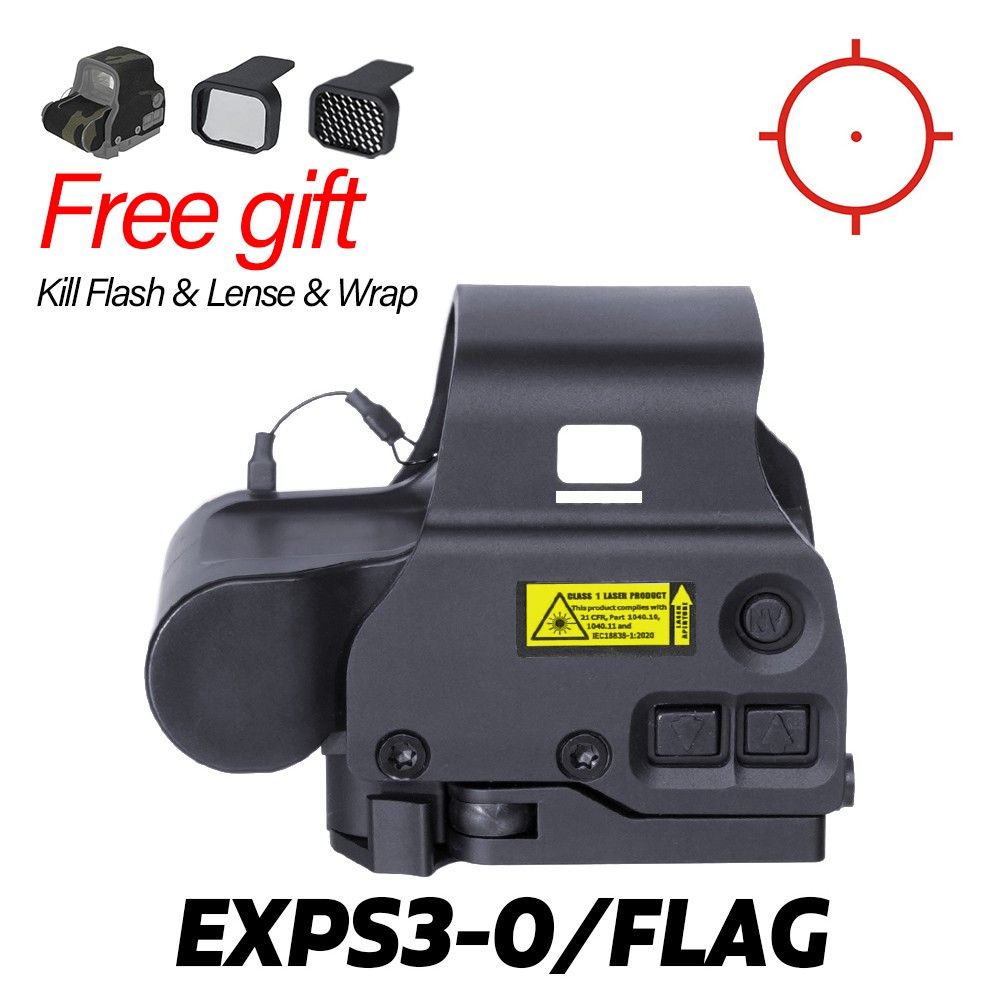
SpecPrecision EXPS3-style sight — fast red-dot / holographic-style path
From our SpecPrecision EXPS3 Replica Guide records, this kind of optic makes more sense than an LPVO on CQB rifles, compact SMGs and fast M4 builds. It gives the familiar EXPS look, quick sight picture and easier mask compatibility. Add a magnifier only if your field distance justifies the weight.
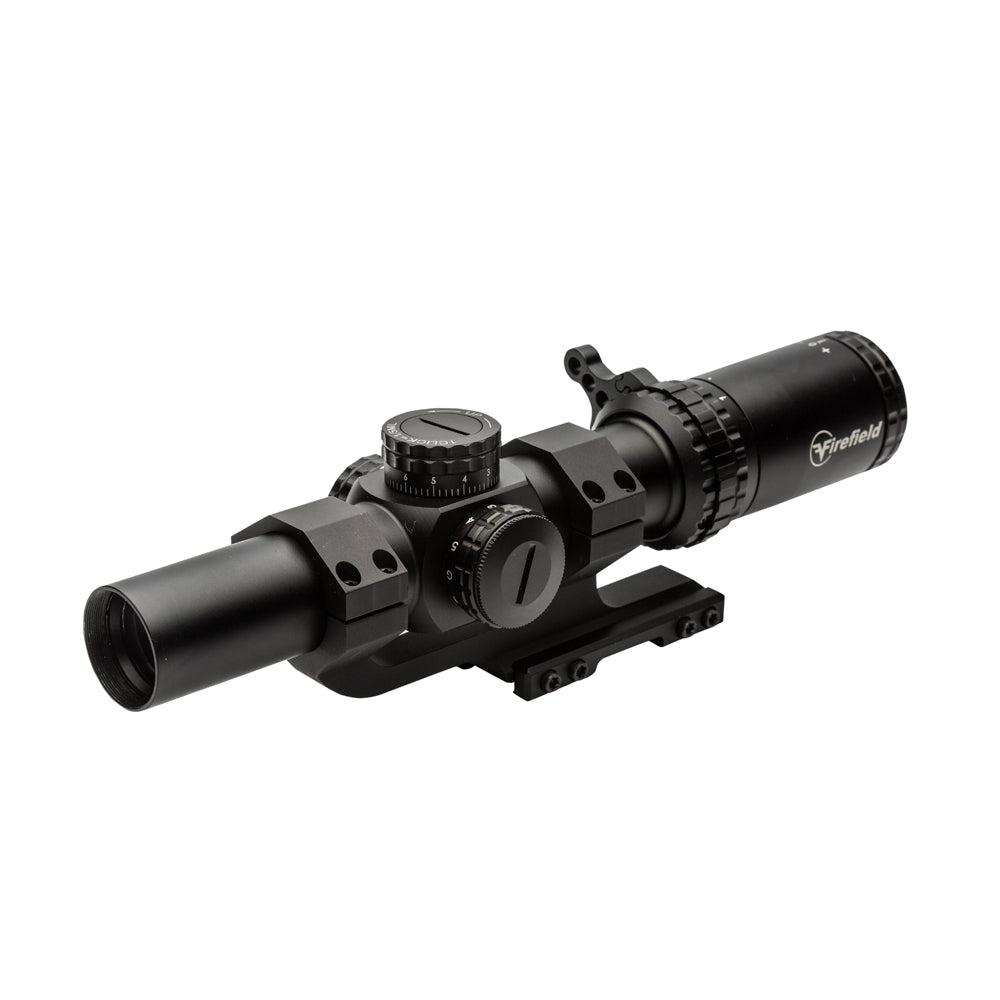
Recommended setups by playstyle
| Player type | Recommended optic | Setup notes |
|---|---|---|
| New player / rental-to-first-rifle upgrade | Simple red dot on a riser | Cheapest path to faster aiming. Spend money on BBs, batteries and field time first. |
| Indoor CQB player | Red dot or EXPS-style sight | Use a riser if your mask blocks cheek weld. Keep brightness low enough to avoid bloom. |
| Outdoor skirmisher | Red dot or 1-4x LPVO | If your field has short lanes, dot wins. If you often need ID through brush, use 1-4x. |
| Woodland DMR / support role | 1-6x LPVO | Run 1x while moving, 3-4x while watching lanes, 6x only for slow confirmation. |
| GBBR / milsim rifle | EXPS-style dot + magnifier or LPVO | Pick by reference build and field layout; avoid overweighting the rifle just for looks. |
| High-end do-everything setup | LPVO + offset/piggyback micro dot | Best capability, most weight and cost. Worth it only if you actually use both sighting systems. |
Lens protection and mounting notes
For airsoft, the most expensive optic mistake is not choosing the “wrong” magnification. It is bringing unprotected glass to a field. A single BB can crack or chip the front lens. Use a polycarbonate protector, killflash, honeycomb guard or BB-rated lens cover before the first game.
- Zero after setting your hop-up and BB weight, not before.
- Use a riser if your mask prevents a natural sight picture.
- Do not bridge an optic across upper receiver and handguard on replicas that flex.
- On LPVOs, confirm eye relief at maximum magnification.
- On red dots, check brightness in actual daylight before game start.
- Remove batteries during long storage to prevent leakage.
ReHub scoring logic
This article is scored as a use-case decision guide, not as one physical product or a hands-on lab test. The score reflects how confident we are in the research-backed recommendation framework for airsoft buyers: red dot for speed, LPVO for information, and lens protection as mandatory for both.
| Criterion | Editor score | Reason |
|---|---|---|
| CQB decision clarity | 9.2 | The red-dot recommendation is clear for indoor and close-range airsoft. |
| Outdoor / DMR decision clarity | 8.8 | LPVO value is strong for woodland and DMR roles, with realistic caveats. |
| Mask and ergonomics realism | 8.7 | The guide accounts for eye relief, risers, masks and awkward positions. |
| Budget product fit | 8.5 | T-Eagle, VictOptics and SpecPrecision references match real budget buyer behavior. |
| Protection and setup guidance | 9.0 | BB protection, zeroing and mounting are treated as core requirements, not footnotes. |
| Upgrade path flexibility | 8.4 | Includes dot + magnifier and LPVO + micro-dot paths without pushing them on beginners. |
Final verdict
For most CQB and fast skirmish players, the red dot is the smarter buy. It is faster, lighter and more forgiving behind goggles. For outdoor DMR and woodland players, the LPVO is worth the trade-off. It slows you slightly at close range, but gives better information when spotting movement, tracking BBs and controlling lanes.
If you are building around a specific product, use this shortcut: SpecPrecision EXPS3-style sight for speed, T-Eagle ER 1.2-6×24 for budget short-dot DMR style, and VictOptics S6 Fiber when you want the safer all-around budget LPVO.
Sources and research notes
This article is based on public market research, specification comparison, community discussion patterns and LarkBell archive records. Key reference points:
- Airsoft & Milsim News — CQB Optics vs LPVOs
- Socom Tactical — Optical Sights and Red Dots Airsoft Guide
- Target Tamers — LPVO vs Red Dot Sights
- Sniper Mechanic — T-Eagle Scope Review
- Reddit r/airsoft — LPVO or Red Dot discussion
- Reddit r/airsoft — LPVO or Dot?
- Local archive references: T-Eagle ER 1.2-6×24 review, Best LPVO for Airsoft, VictOptics S6 review, and SpecPrecision EXPS3 Replica Guide on guide.larkbell.com.
Images used in this article are real product/reference images already uploaded to guide.larkbell.com from previous LPVO and red-dot research work, with descriptive captions added for comparison context. They are not generated graphic cards.



